AI Workflows

Turn AI requests into controlled, repeatable workflows

Coordinate models, tools, retrieval and execution logic in one structured path.

IntraLLM AI Workflows help your team move beyond isolated prompts and define how inputs are processed, routed and transformed into useful outputs across the platform.


Why IntraLLM

Give complex AI tasks a clear path
from Input to Outcome.

A useful AI process often involves more than sending a prompt to a model. It may need to retrieve relevant context, call a function, route a request according to a condition, transform information or pass work to a specialised pipeline.

IntraLLM AI Workflows provide the execution structure behind those steps. Your team can define how platform capabilities interact, creating a more coherent and repeatable way to process requests across advanced assistants, automation and retrieval-based experiences.

Structure multi-step execution

Turn a complex request into an ordered process where each model, tool or transformation has a clear role in producing the result.

Connect platform capabilities

Bring model inference, retrieval, functions, tools and pipelines together instead of treating each capability as an isolated component.

Create repeatable behaviour

Use defined execution logic to support consistent processing across templates, tool-based tasks, pipelines and other automated experiences.


AI Model Training Workflow

From model selection to practical use.​

Move through one connected workflow for selecting a model, preparing data,
running GPU training and putting the result to work.
01

Define the Path

Turn the task into a clear execution path
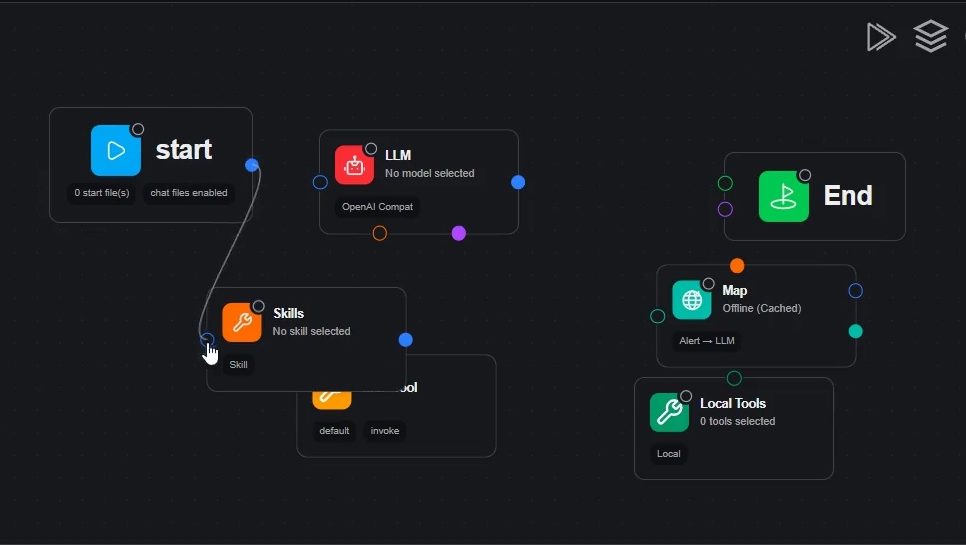
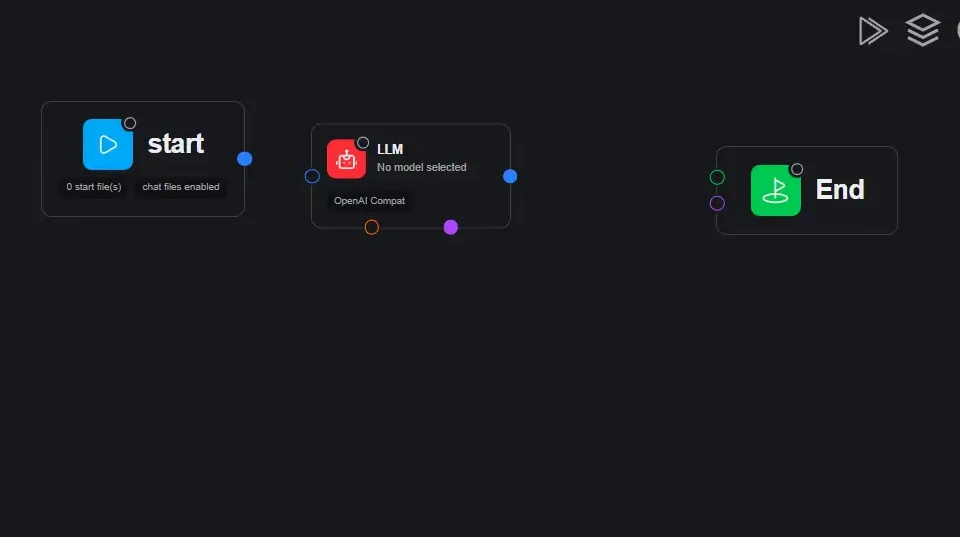
Begin with the request, the result it should produce and the decisions required along the way. Lay out that journey as a structured workflow so your team can see how the process moves from its starting point to a useful outcome.

02

Bring intelligence and action together

Connect the capabilities needed to complete the work

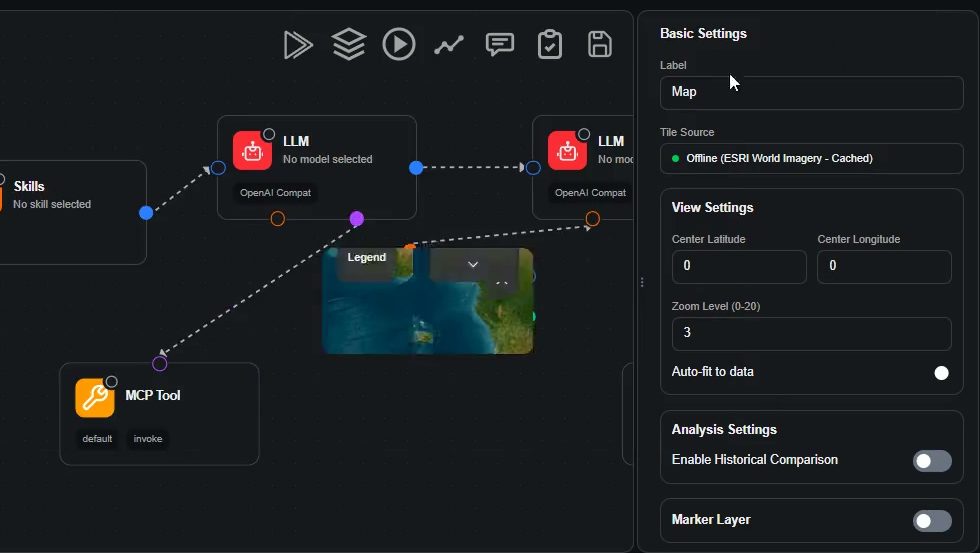
Add models, agents, skills, tools and data-processing components wherever they contribute most. Each node performs a focused role while the connections coordinate them as one complete process.

03

Give every stage a clear role

Configure how each component contributes

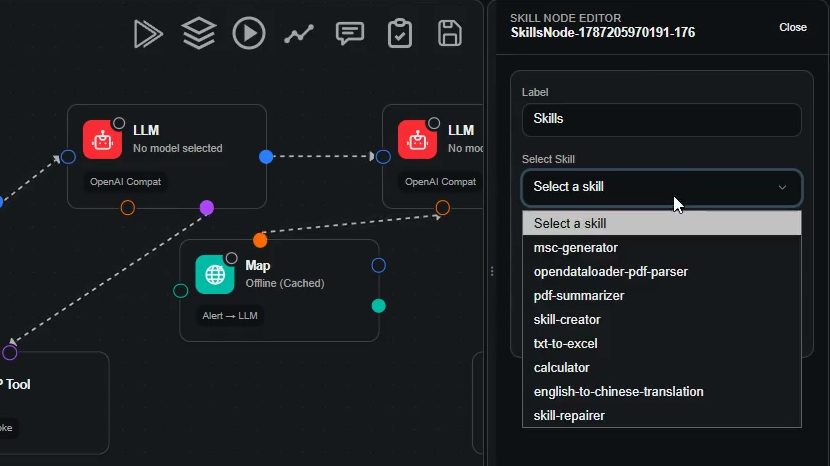
Select the model, skill or tool behind each node and define the behaviour required at that point in the process. Teams can refine individual stages without losing sight of how they contribute to the wider workflow.

04

Run, trace and refine

See how the workflow performs before putting it to work

Run the complete workflow and inspect how information moves between its stages. Node-level traces reveal the inputs and outputs produced along the route, helping technical teams understand the execution and refine the configuration where needed.

05

Turn the workflow into repeatable operation

Put coordinated AI behind real work

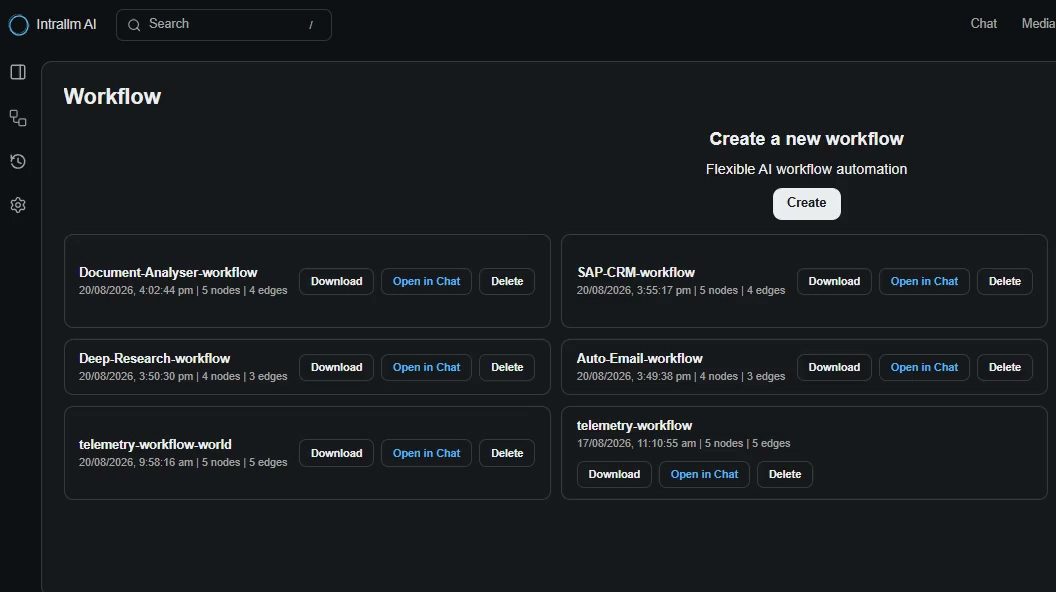
Save the completed workflow and use its execution logic wherever the same process is needed. Workflows can support Chat experiences, reusable templates, specialised pipelines, tool-based execution and automated tasks across IntraLLM.


Connected Outcome

Make workflow logic useful
across the platform

A workflow is not an isolated diagram. It defines how IntraLLM processes requests behind practical AI experiences, providing a common execution structure for reusable templates, specialised pipelines, tool-enabled interactions and automated tasks.

Support reusable templates
Provide the execution logic behind templates that need a consistent sequence of models, tools and processing steps.
Coordinate specialised pipelines
Connect a workflow to pipeline execution when a task requires custom logic or more specialised processing.
Enable tool-based tasks
Structure when tools and functions contribute to a request, subject to the capabilities enabled in the deployment.
Power automated processes
Give repeatable tasks a defined route from incoming information to the required output.

Features

Build the execution logic your use case requires

Multi-step orchestration

Coordinate a sequence of execution stages when a request requires more than a single model response.

Model inference

Place model reasoning or generation at the appropriate point within a wider processing flow.

Tools and functions

Call enabled tools or functions to retrieve information, perform deterministic operations or interact with connected services.

Retrieval and
context injection

Bring relevant knowledge into the execution path before the model produces or refines a response.

Conditional logic
and routing

Direct information through different paths according to the workflow's configured conditions.

Pipeline execution

Use specialised pipelines for custom, extensible or more resource-intensive processing where the deployment is configured to support them.


Use cases

Where structured AI execution makes a difference

Knowledge-driven assistants

Retrieve relevant organisational context, inject it into the request and guide the model towards a grounded answer through a defined sequence.

Operational task support

Coordinate model decisions with enabled functions or tools to support repeatable tasks involving data, applications or internal services.

Document and information processing

Route inputs through extraction, transformation, retrieval or specialised pipeline stages before producing a usable output.

Multi-stage automation

Structure processes that require several capabilities to work together, from initial input through routing and execution to the final response.