AI Templates

Start with a template,
Shape the assistant you need.

Explore reusable AI templates for business and technical tasks, understand how each one is designed to work, then adapt the model, instructions and capabilities for your organisation. Move from a useful starting point to a configured assistant without rebuilding the experience from the ground up.


Why IntraLLM

Give every new AI use case
a stronger starting point

Building a useful assistant involves more than choosing a model. Teams also need to define its purpose, instructions, generation behaviour, starting prompts and available capabilities. Repeating that setup for every use case slows experimentation and makes it harder to preserve configurations that already work.

IntraLLM AI Templates bring those decisions together in a reusable format. Teams can begin with an existing assistant pattern, inspect what it offers, adapt the configuration and move it into Chat as a practical working experience.

Find the right foundation

Search and filter a central library to find templates aligned with a task, business function or industry context.

Understand before you launch

Preview a template's purpose, conversation starters and enabled capabilities before deciding whether it fits the use case.

Adapt without starting over

Change the model, system instructions, generation settings and capabilities while preserving a useful template as the starting structure.


Product journey

From a useful starting point to a working assistant

Move through one connected workflow for selecting a model, preparing data,
running GPU training and putting the result to work.
01

Discover the library

Find templates around the work your team needs to do

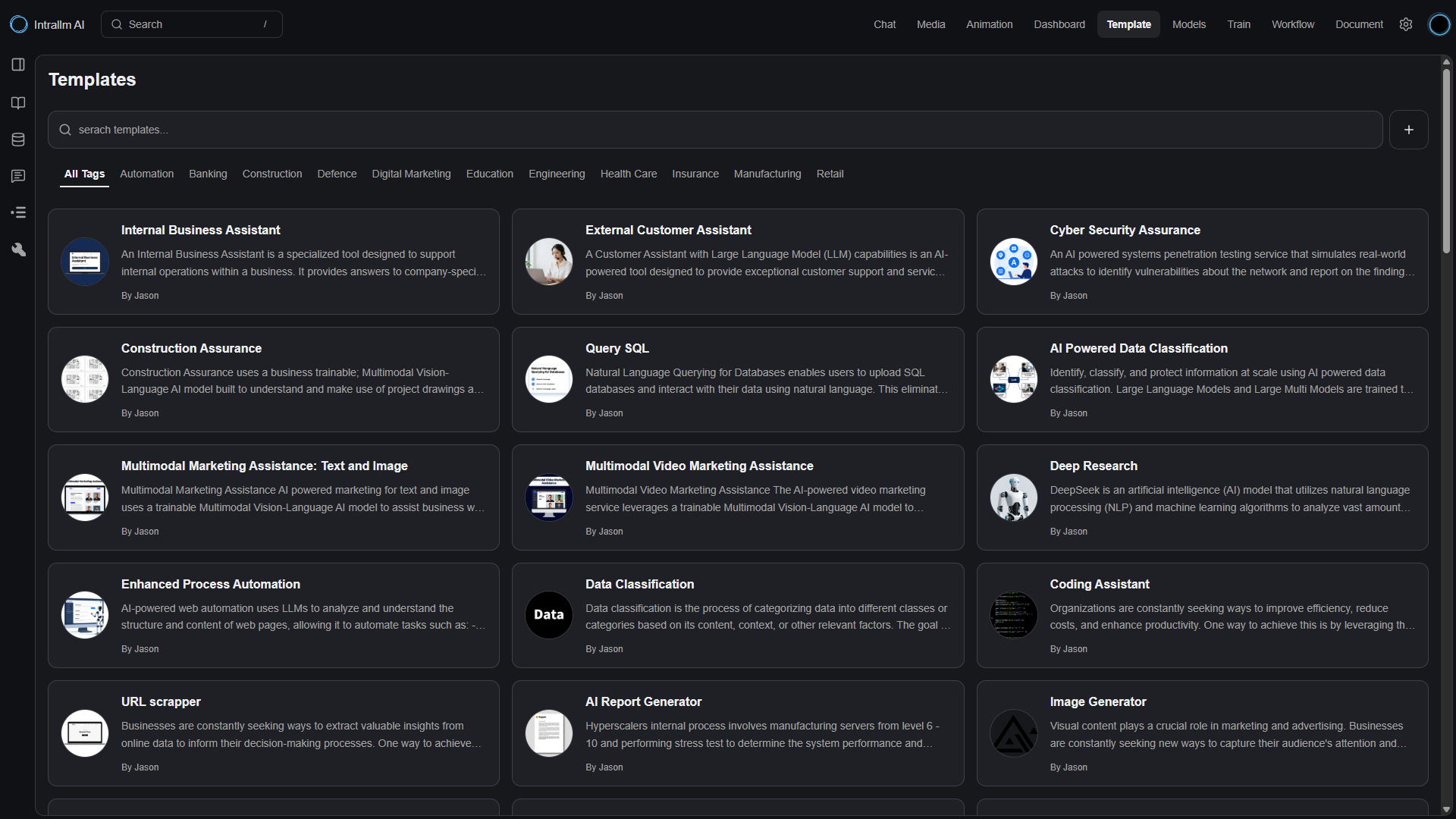
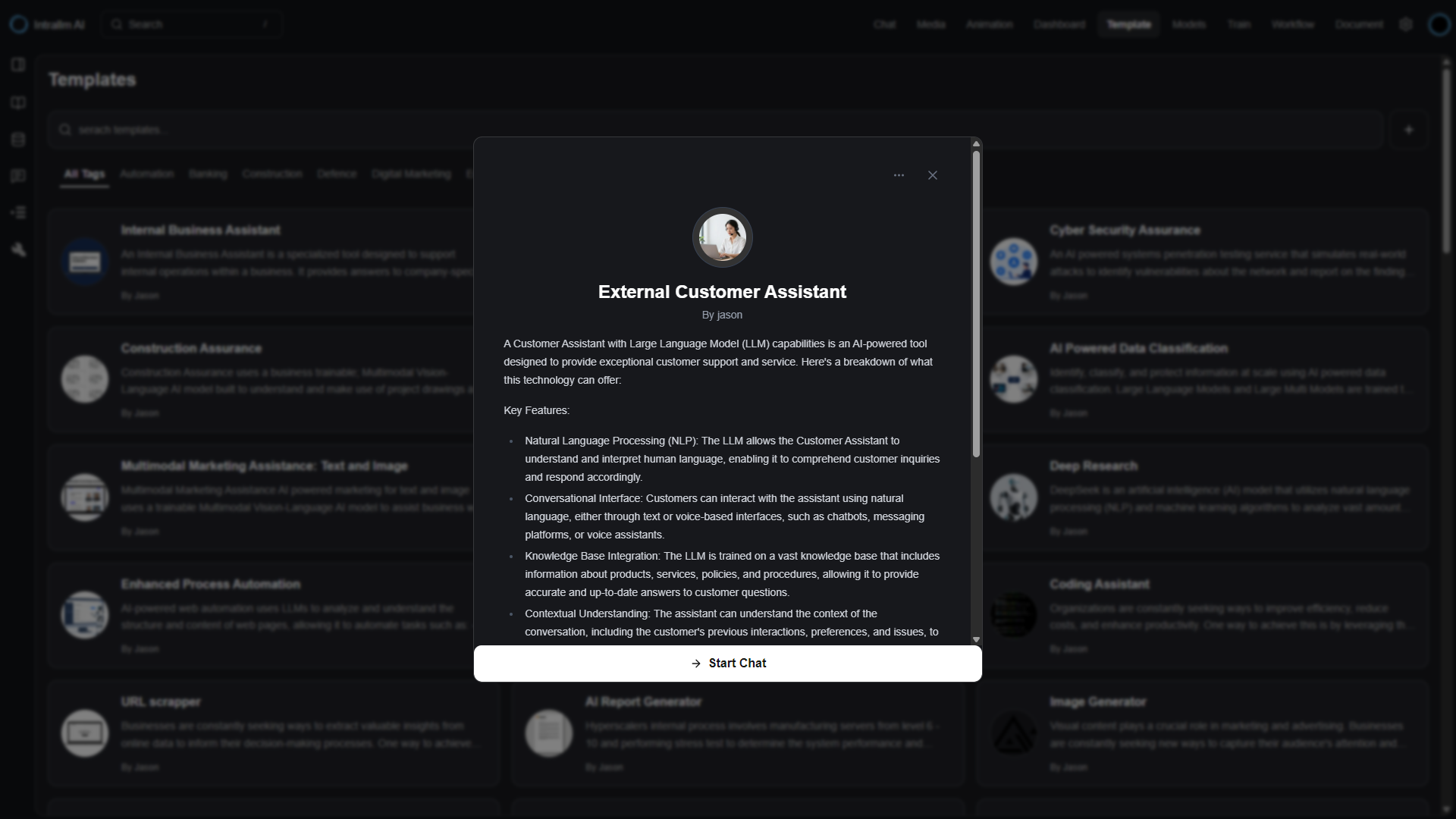
Browse the full collection, search by name or purpose, or use tags to narrow the library by business and industry context. Each card introduces the template’s role and creator, helping users move quickly from a broad requirement to a more relevant starting point.

02

Preview the experience

See what the template brings before operating it

Open a template preview to review its purpose, conversation starters and enabled capabilities. This provides a clearer picture of the intended experience before a user launches it in Chat or decides to adapt the configuration.

03

Shape the template

Give the assistant the identity and runtime it needs

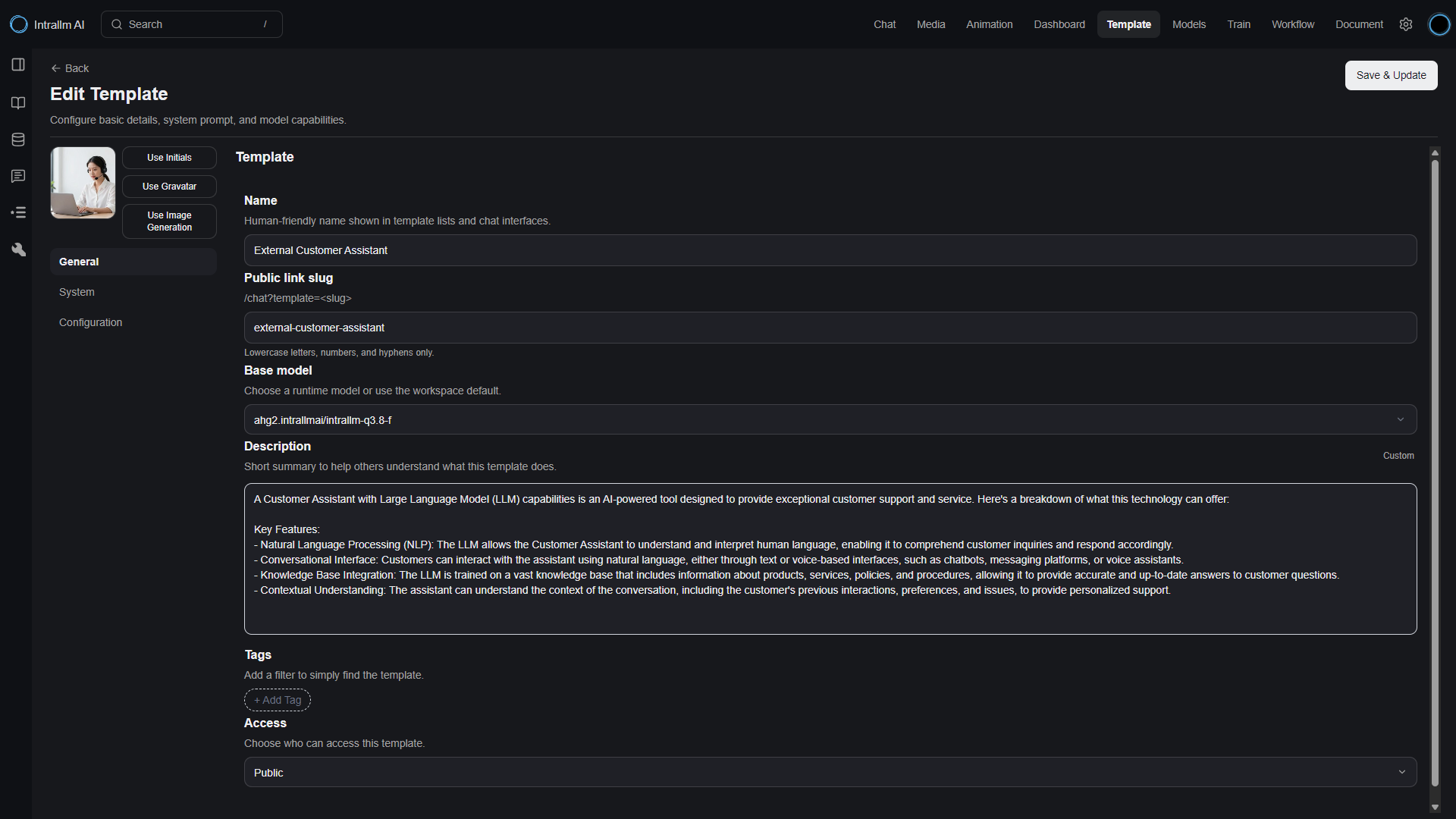
Configure the template name, visual identity, link slug, base model, description and tags. These settings make the assistant easier to recognise, organise and access while connecting it to an available runtime model in the workspace.

04

Define its behaviour

Control how the assistant responds and what it can do

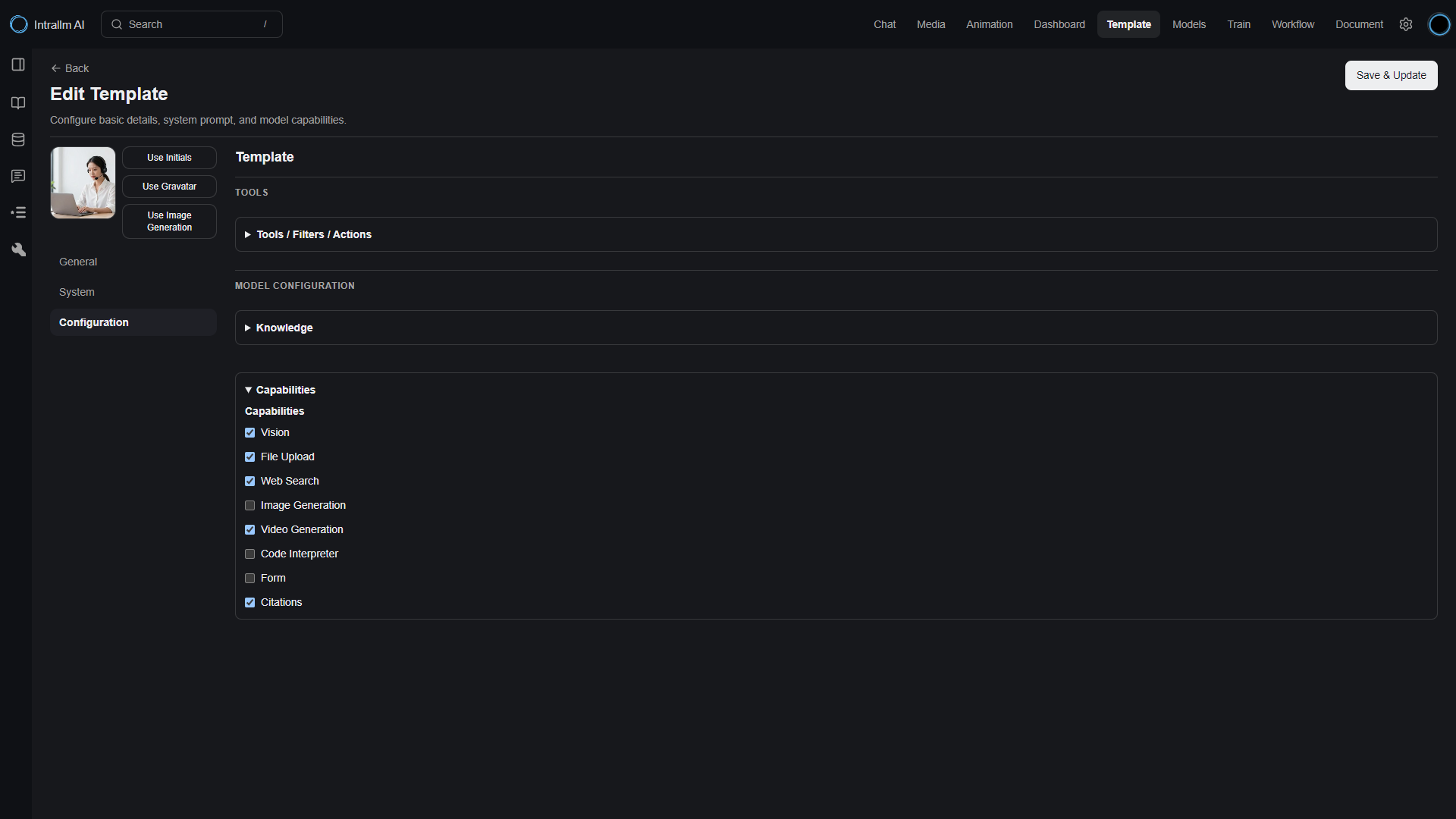
Add system instructions and refine generation behaviour through temperature, token limits, stop sequences and sampling or penalty controls. Configure conversation starters, then enable the capabilities the experience requires—from file and image input to web search, generation, code interpretation, forms and citations.

05

Launch and reuse

Put the configured assistant directly into Chat

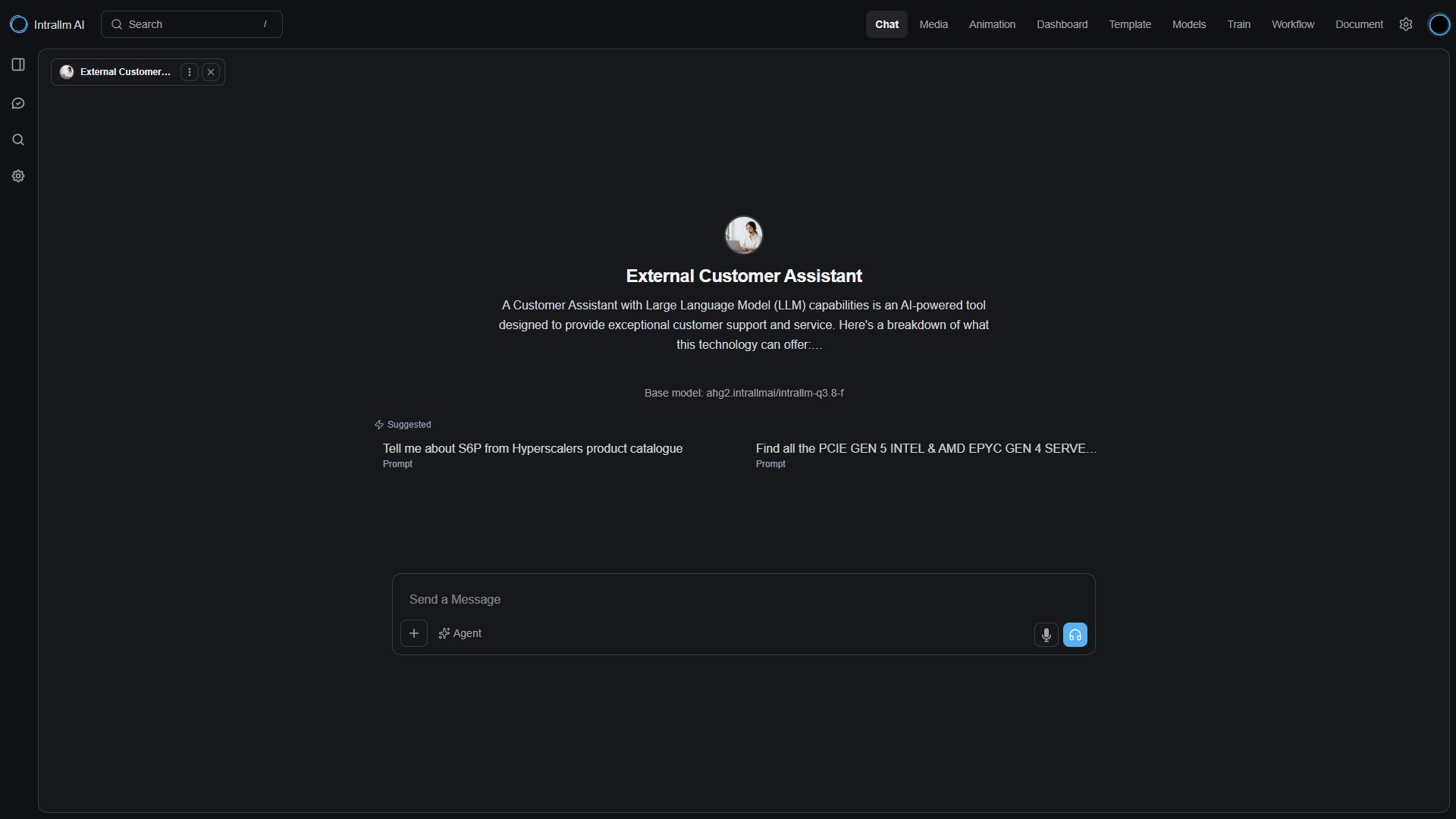
Start Chat opens the selected template as the active assistant, carrying its identity and configured experience into the conversation. When a similar use case appears, clone the template and adapt the copy instead of rebuilding the setup. Templates can also be imported, exported or accessed through a copied link where deployment settings allow.


Connected outcome

Turn Configuration into
a Repeatable Chat Experience

A template is more than a description card. It brings together the model, assistant identity, system instructions, response settings, conversation starters and enabled capabilities that shape an interaction.

When opened in Chat, that configuration becomes the starting experience users work with.

Keep useful assistant patterns
Capture the setup behind a task-specific assistant instead of recreating the same configuration for every new conversation or use case.
Create variations without losing the foundation
Clone an existing template, then change the copy to suit another team, task or operating context.
Move templates between environments or workflows
Use import and export controls to support template portability, subject to the formats and deployment rules enabled in the platform.
Open the result where teams work
Launch the template directly in Chat so users can begin with the intended assistant already selected.

Features

Configure the parts that make an assistant useful

Model Training is part of the wider IntraLLM experience.
The outcome is not left isolated in a training environment:
it becomes a model that can be managed,
accessed and used through the platform.

Reusable assistant blueprints

Package an assistant’s purpose, identity, instructions, model settings, conversation starters and capabilities into a configuration that can be used repeatedly.

An organised AI portfolio

Build a growing library around business functions and industries, with search and tags helping users find the right assistant for each task.

Flexible model assignment

Select an available runtime model for a specific template or inherit the workspace default to align assistants with deployment requirements.

Precise behaviour control

Shape how each assistant responds through persistent system instructions and optional generation controls, including temperature, token limits, Top P and penalties.

Purpose-built capability profiles

Configure the interaction modes each assistant needs—including vision, file upload, web search, generation, code interpretation, forms and citations.

Adapt, move and use immediately

Clone templates for related use cases, import or export configurations, copy direct links and launch the finished assistant straight into IntraLLM Chat.


Use Cases

Purpose-built assistants
for the work your organisation needs

Explore specialised IntraLLM solutions designed to support different teams, tasks and business requirements.