A logo showing a cluster of nodes and one manager
Cluster Manager

Keep the infrastructure behind your AI in view

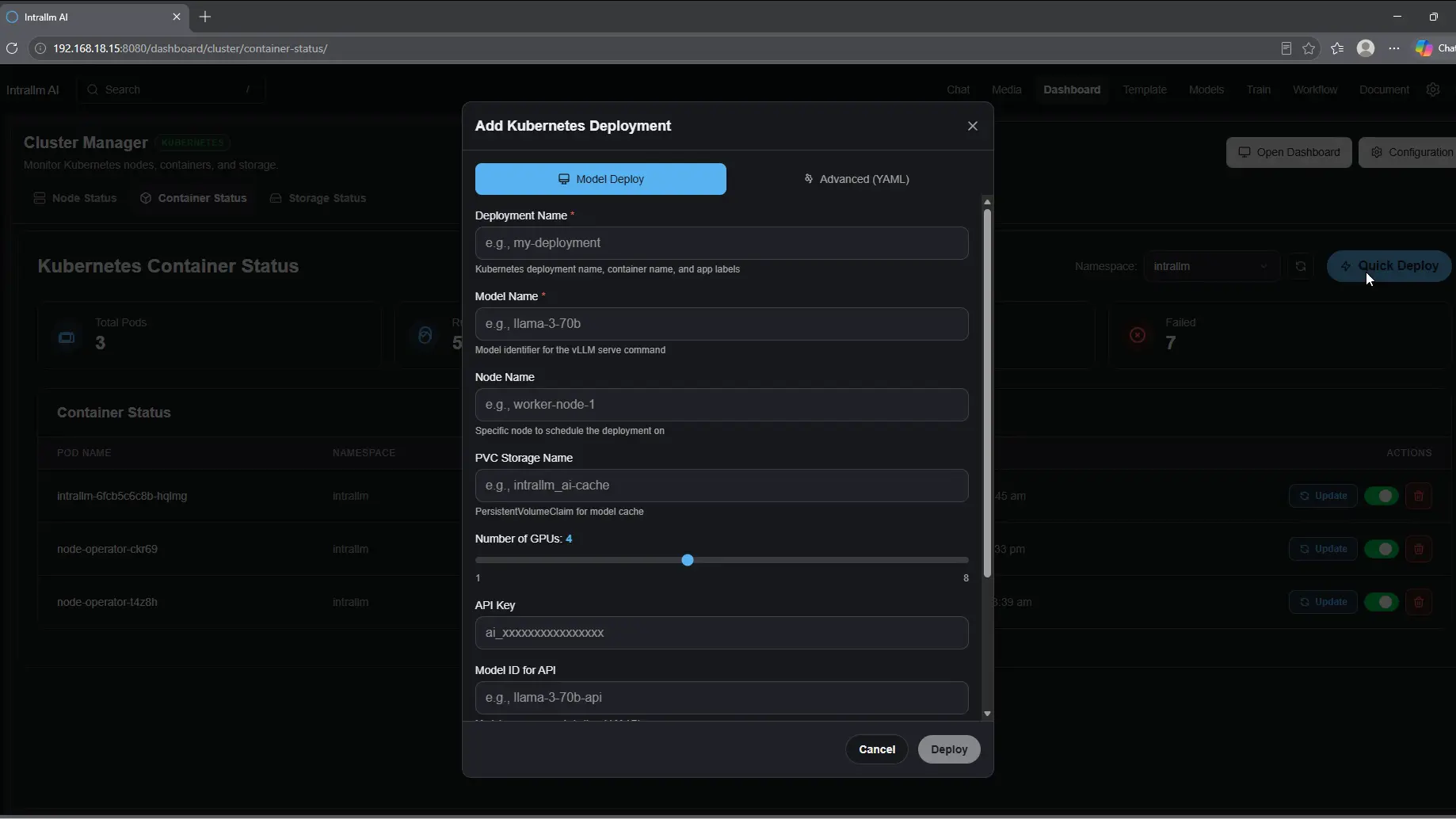
Monitor cluster availability, node health and resource utilization from one clear operational view.

IntraLLM Cluster Manager helps administrators see where compute capacity is available, where pressure is building and which nodes may need attention.

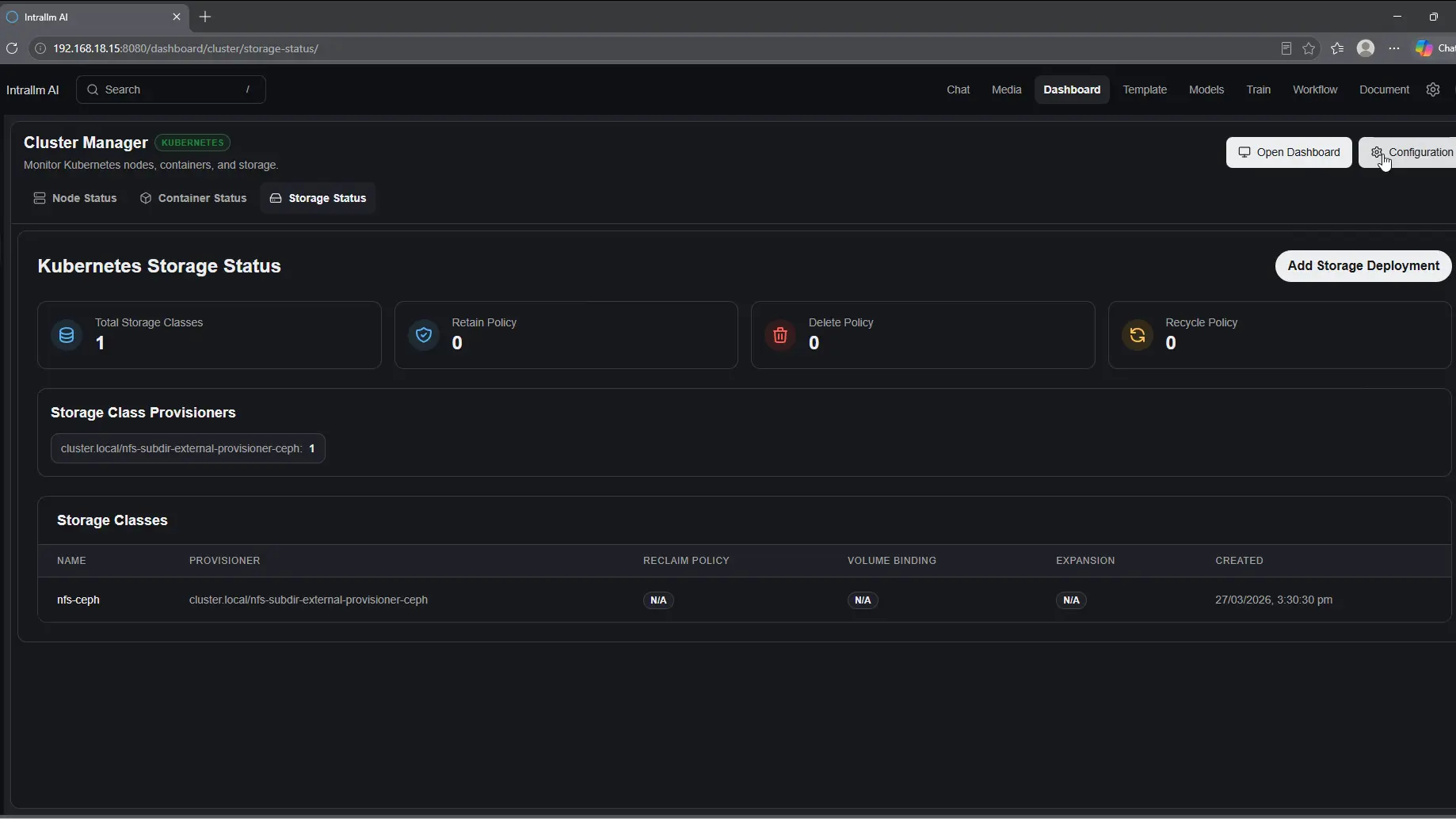
IntraLLM Cluster Manager showing Kubernetes storage classes and reclaim policies.

Why IntraLLM

Turn infrastructure signals into operational clarity

Every model response, workflow and automated task depends on the compute environment behind it. When cluster health and resource signals are difficult to interpret, platform teams can lose time establishing whether an issue belongs to the AI experience, the workload or the infrastructure beneath it.

IntraLLM Cluster Manager brings essential cluster and node information into a shared view. Administrators can check availability, compare resource usage and identify nodes that appear inactive or under pressure—creating a clearer starting point for investigation and planning.

See cluster health live

Start with a concise view of cluster availability and node state before moving into the details that may require attention.

Understand where
capacity is going

Compare CPU, memory and workload usage across nodes to see how available resources are being consumed.

Plan with current
operational context

Use regularly refreshed infrastructure information to support day-to-day decisions and longer-term capacity conversations.


Operational visibility

See the State of Your AI Infrastructure

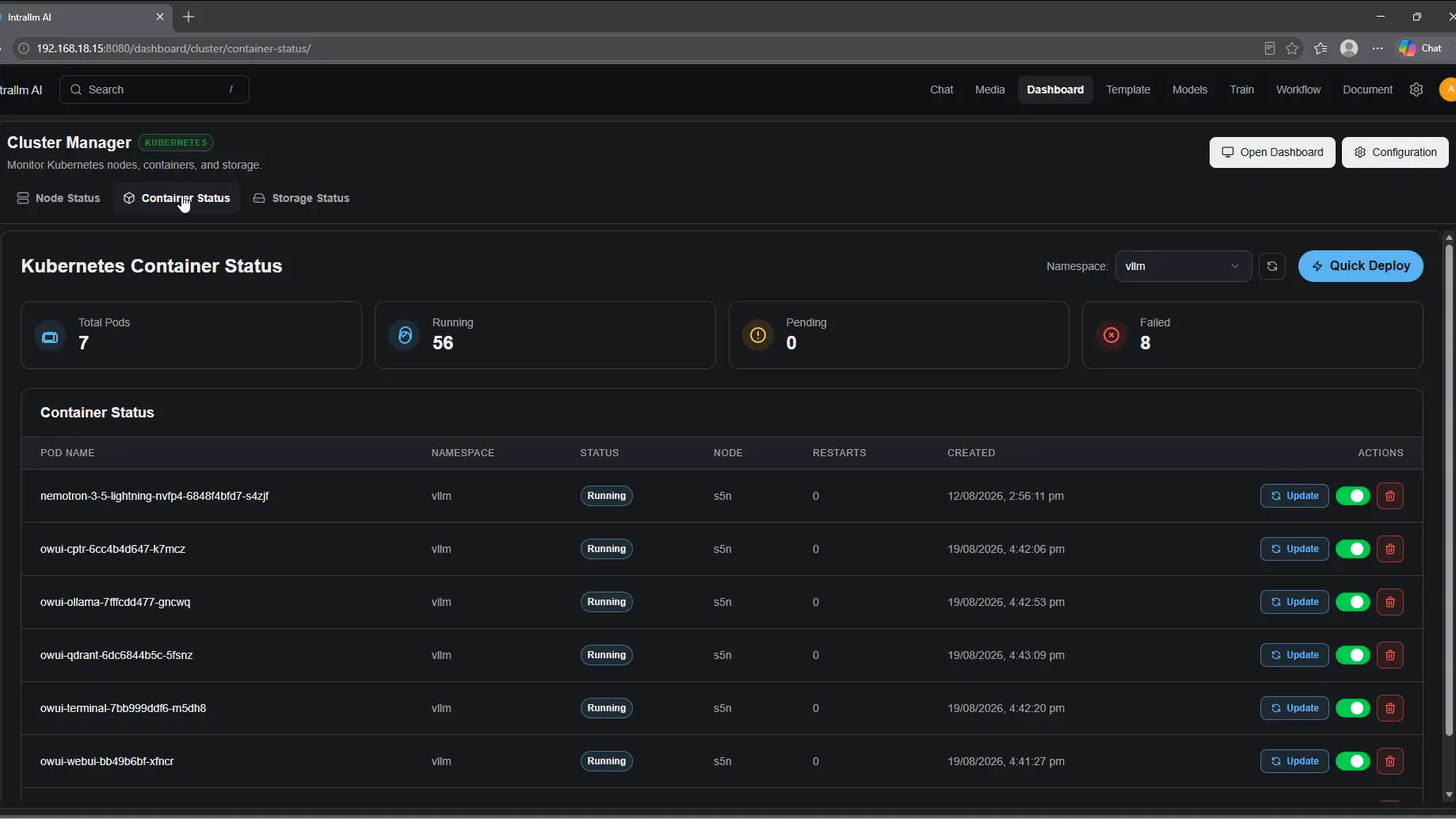
Cluster Manager brings the essential signals behind your IntraLLM environment into one operational view. Move between overall cluster health, node-level utilisation and workload activity to understand what is running, where resources are being used and what may require attention.
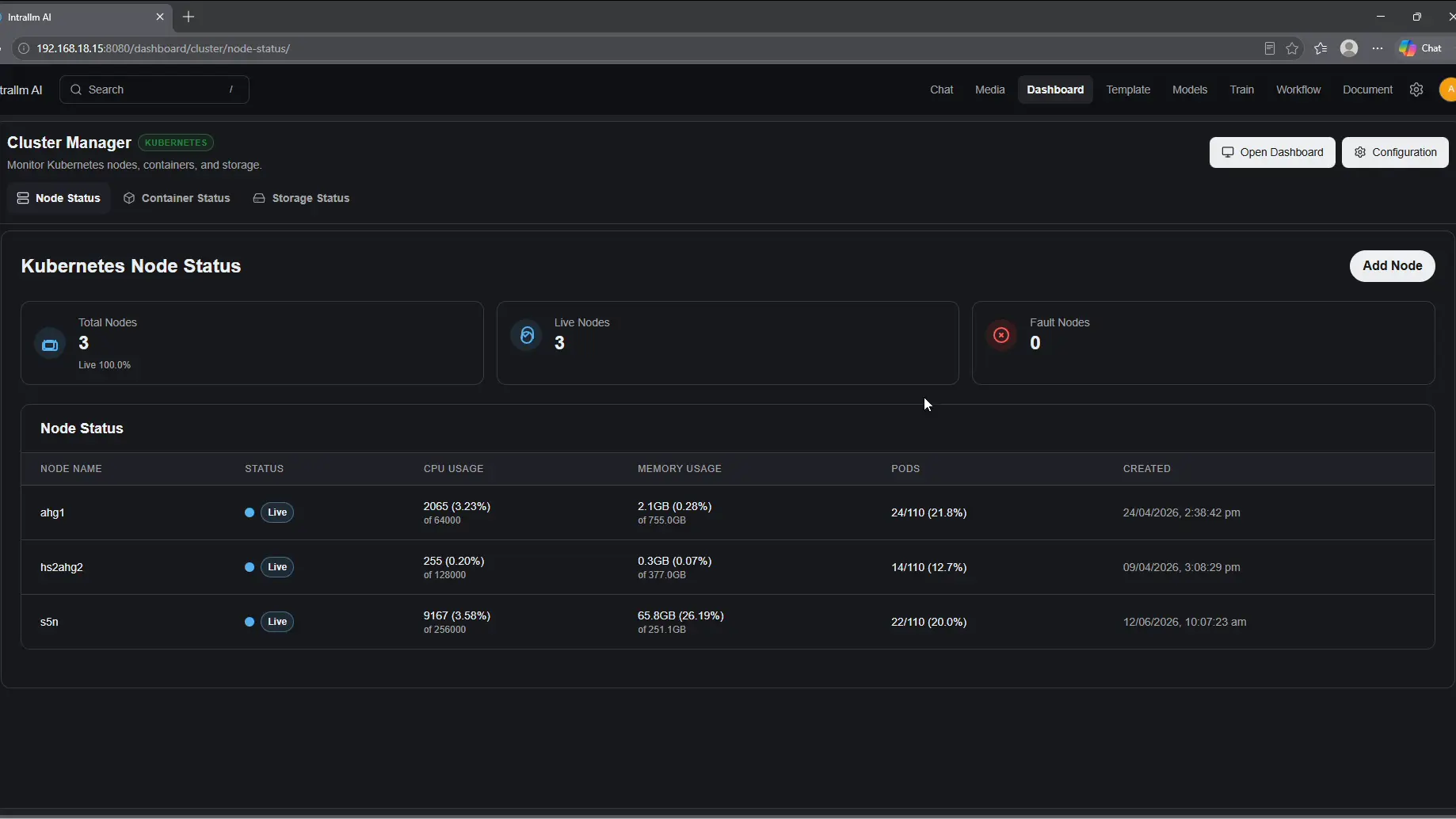
Understand cluster health at a glance

Start with a clear view of availability

See the total, live and fault status of nodes across the cluster. This high-level view helps administrators quickly confirm whether the compute environment supporting IntraLLM is available and operating as expected.

Compare resources across nodes

See where capacity is available or under pressure

Review CPU and memory capacity alongside current utilisation for each node. Comparing these signals makes it easier to recognise uneven resource use, potential constraints and nodes that warrant closer investigation.

Connect infrastructure to workload activity

Understand what is running across the cluster

View pod or workload counts alongside node status and resource usage. This adds operational context to the infrastructure picture, helping teams understand how active workloads relate to the capacity available on each node.

Identify where attention may be needed

Give investigation and planning a clearer starting point

Use cluster status and utilisation signals to recognise inactive, faulted or heavily utilised nodes. Cluster Manager provides the evidence needed to begin an investigation, coordinate with infrastructure teams or assess future capacity requirements.


Connected outcome

Give AI and Infrastructure Teams
a Shared Operational Picture

Cluster Manager connects the platform experience to the infrastructure supporting it.
Instead of beginning every operational question with fragmented infrastructure checks,
teams can start from the same view of node health, capacity and workload activity.

Support day-to-day operations
Check cluster availability and resource status as part of routine platform oversight.
Create a clearer starting point for investigation
Compare node state, utilisation and workload counts when an AI service or workload needs closer attention.
Strengthen capacity conversations
Use current CPU, memory and workload information to assess where resources appear available or constrained.
Improve cross-team coordination
Give AI platform and infrastructure teams a common set of signals when deciding what should happen next.

Features

See the signals that keep
AI infrastructure understandable

Cluster Health Overview

Review the availability of the compute environment supporting IntraLLM from a concise operational dashboard.

Node Status

See the current operational state of each listed node and identify infrastructure that may be inactive or require attention.

Pod and Workload Counts

See the number of running pods or workloads associated with a node and relate activity to available resources.

CPU Utilisation

Compare CPU capacity and usage to understand how processing resources are being consumed across nodes.

Memory Utilisation

Review memory capacity and usage alongside CPU information for a more complete picture of resource pressure.

Node Age

View how long a cluster or node has been active, adding useful context to its current operational state.


Use cases

Where cluster visibility makes a difference

Daily platform checks

Confirm cluster availability, node state and resource usage as part of routine IntraLLM operational oversight.

Operational investigation

Use node-level status, CPU, memory and workload context as a starting point when a service appears unavailable or slow.

Capacity review

Compare resource usage across nodes to recognise potential constraints and support evidence-based capacity discussions.

AI workload readiness

Review the current compute picture before teams introduce or expand resource-intensive models, workflows or automated processes.